

Date: 20 May, 2026
Construction projects create waste fast. One day it’s broken concrete and timber offcuts, and the next it’s piles of plasterboard, bricks, metal scraps, and packaging. Choosing the wrong skip bin can slow down a job site, increase costs, and create unnecessary safety issues.
For builders, understanding builder skip bin sizes is not just about ordering a container and filling it up. It’s about managing workflow, reducing downtime, keeping sites compliant, and making waste removal more efficient from demolition through final clean-up.
At Get Bin Hire, builders often ask the same question: “What size skip bin do I actually need for this project?” The answer depends on the type of waste, site access, project duration, and estimated debris volume.
This guide breaks down common Skip Bin Sizes, explains how they apply to different construction jobs, and shares practical advice based on real-world building site experience.
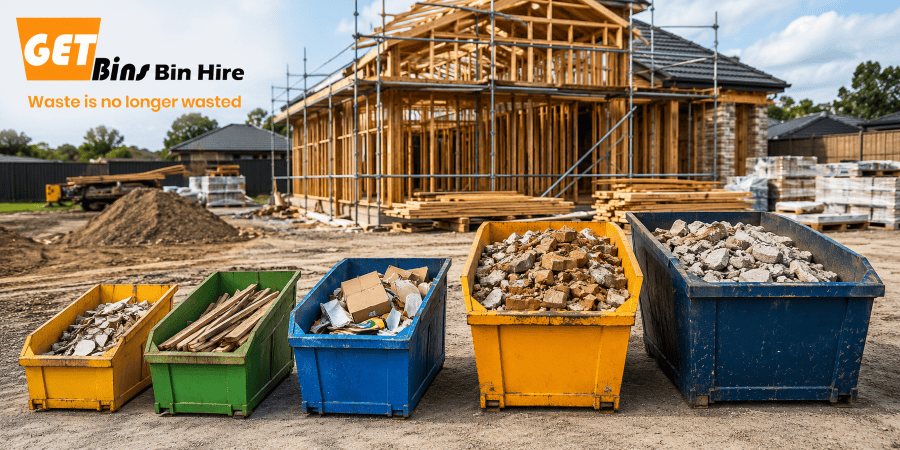
When discussing builder skip bin sizes, most providers measure bins in cubic metres (m³). One cubic metre represents the equivalent of a cube measuring 1m x 1m x 1m.
However, estimating construction waste is rarely that simple.
Heavy materials like bricks and concrete take up less physical space but add significant weight. Lightweight materials such as insulation, cardboard, and timber may fill a bin quickly even if they weigh very little.
That’s why builders need to think about two things:
The wrong estimate can lead to:
Smaller bins are commonly used for:
These bins suit tight-access residential sites where space is limited.
A builder renovating a compact suburban bathroom may only generate a moderate amount of debris. In this case, a 2m³ or 3m³ skip is often enough for:
Choosing a larger skip for this type of job usually wastes money and valuable driveway space.
These are among the most popular builders bins because they balance capacity and practicality.
They work well for:
Many experienced contractors choose mid-sized bins because they:
For many residential builders, this size range becomes the “safe middle ground” when estimating debris volume.
Larger construction bin sizes are ideal for:
These bins hold substantial waste volume, reducing the need for constant pickups.
A common mistake is filling large bins entirely with heavy materials like:
Even if the bin physically fits the material, transport weight restrictions may apply.
Experienced builders often separate heavy waste into dedicated smaller bins while reserving larger skips for lighter mixed waste.
One of the hardest parts of construction waste management is estimating actual waste volume before work begins.
Builders often underestimate:
Experienced site managers typically:
A safe rule is to allow slightly more capacity than expected. Overfilled skips can create safety issues and may not be legally transportable.
These are designed for combined construction materials, including:
They are ideal for active building sites where multiple trades generate waste simultaneously.
Mixed waste bins may cost more due to sorting requirements at recycling facilities.
Used specifically for:
Heavy waste bins are usually smaller because of transport weight limits.
Many people assume larger bins are better for heavy materials. In reality, overloaded bins may:
Construction projects involving landscaping often require separate green waste disposal.
Typical contents include:
Separating green waste can improve recycling outcomes and reduce landfill costs.
During demolition, waste output is unpredictable and often dense.
This approach improves safety and workflow efficiency.
Framing stages generate:
A mid-sized mixed waste skip usually works best here.
Builders frequently underestimate how quickly packaging accumulates during framing and material deliveries.
The final stage produces lighter but bulky waste, including:
Larger mixed waste skips are often ideal during this phase because volume increases rapidly even when weight stays low.
This is the most common issue.
An undersized skip often results in:
Builders trying to save money upfront often spend more later through additional pickups.
Not all sites can accommodate large bins.
Factors that matter include:
Experienced builders always confirm site logistics before ordering larger builders bins.
Some materials require special disposal processes, including:
Placing prohibited items into standard skips may lead to rejected loads and additional disposal charges.
This single strategy can significantly reduce waste costs.
Heavy materials reach weight limits quickly, while lighter materials consume space.
By separating:
from:
builders improve loading efficiency and avoid overpaying.
Professional builders rarely wait until bins are completely full.
Instead, they:
This prevents work stoppages and keeps sites cleaner.
Poor skip placement creates unnecessary labour.
Good placement:
On larger projects, multiple smaller bins may work better than one oversized container.
Today’s building industry is under increasing pressure to reduce landfill waste.
Many skip providers now sort:
for recycling and recovery.
Builders who separate waste streams properly often:
Modern construction waste management is no longer just about removal. It’s about resource recovery and responsible site operations.
Experienced builders rarely guess blindly.
They often use:
A full kitchen renovation typically generates:
An experienced contractor may already know this usually fills approximately:
This type of experience-based estimating helps avoid costly surprises.
Some projects benefit more from several smaller skips instead of one large container.
This is especially true when:
This system improves organisation and recycling efficiency.
Overflowing waste creates real safety hazards.
Poor waste management can cause:
Correctly sized skips help maintain:
Experienced builders treat waste management as part of overall site planning — not an afterthought.
Waste removal should be included during project planning, not halfway through construction.
Early planning allows builders to:
The most organised building sites usually have a clear waste management strategy from day one.
Understanding builder skip bin sizes is essential for running an efficient, safe, and cost-effective construction project.
The right Skip Bin Sizes depend on:
From small renovation work to major commercial builds, selecting the right construction bin sizes helps builders:
Experienced contractors know that effective waste planning is just as important as material scheduling or labour coordination.
Get Bin Hire supports builders with practical waste solutions designed for real construction environments, helping projects stay cleaner, safer, and more organised from start to finish.
Most builders use 4m³ to 6m³ skip bins for general renovation and construction waste because they balance capacity and site accessibility well.
No. Materials like concrete, bricks, and soil usually require dedicated heavy waste bins due to transport weight limits.
Estimate based on project size, demolition work, and material types, then allow extra space for unexpected debris and packaging waste.
Yes. Mixed waste bins are commonly used for timber, plasterboard, plastics, metal, and general building debris on active sites.
Builders should organise skip bins before demolition or construction begins to avoid delays, overflowing waste, and unsafe site conditions.

A fantastic local business that always delivers and picks up on time. Great customer service, reliability, and pricing. Would recommend it to anyone looking for skip bins! I have found Get Bin Hire to be extremely professional and their prompt skip delivery is second to none.

We have been employing Get Bin Hire for our trash disposal for more than a year as a company that constructs transportable buildings, and we are super happy with their service. They are constantly available to help and offer quick, amiable, and dependable service.
I made a call yesterday to request delivery of a small skip bin to my house. I simply wanted to express my gratitude for making the effort to arrange for the bin's delivery so quickly. Thank you Get Bin Hire for your super fast approach.

Get Bin Hire has always been ready to assist and always provides fast, friendly, and reliable service. I always received a quick delivery and also the exact size of a bin with an efficient pickup. I would always recommend Get Bin Hire.
Our goal at Get Bin Hire is to provide you with the most affordable option for both residential and commercial skip bin rental. Our business specialises in providing a wide variety of skip bins to meet a wide range of requirements.

